The first thing to buy is a monitored alarm your parent will wear: about $35 to $50 a month in the US with fall detection, £25 to £36 a month from a private provider in the UK, or a few pounds a week from a council. There is no single product called a senior monitoring system. There are 6 layers of help, each answering a different worry, and I would add them in this order: alarm, fall detection, a daily check-in, sensors, a camera, then company. Install nothing past the alarm without your parent's agreement.
Every product named here is on sale, with prices from makers' and councils' own pages checked on 22–23 November 2026. If you are not sure which worry comes first, this is how they map:
| Main worry | What helps | Typical cost (US, 22 Nov 2026) |
|---|---|---|
| A fall when nobody is there | Monitored alarm with fall detection, or a cellular Apple Watch | About $35 to $50/month with fall detection; Apple Watch from $249 plus a cellular plan |
| Not hearing from them for a day | Daily check-in call, a family app on an alarm or companion robot | Free to about $35/month |
| Wandering or getting lost | A mobile alarm with GPS, such as Life Alert's HELP On-the-Go + GPS | Ask the provider whether GPS is on the plan |
| Loneliness | Robot pet, companion robot, local visiting schemes | $159.99 to $179.99 for a Joy for All cat or pup; ElliQ $39 to $59 a month plus $249 |
| Changes in routine (not eating, not getting up) | Motion or door sensors | Few makers publish consumer prices |
A help button worn everywhere in the home
This is the base layer, and everything else depends on it. A monitored alarm is a pendant, wristband or watch connected to a call centre whose agent can call 911, a neighbour or you.
On 22 Nov 2026 Lively started at $24.99 a month (plus taxes and fees) with the Mobile2 at $89.99 (sale; regular $119.99). Bay Alarm Medical started at $27.95 for a landline home system, MobileHelp Classic Cellular at $29.95, and Medical Guardian MG Home Cellular at $34.95 billed annually ($38.95 month to month); its MG Move watch runs to $49.95 a month billed monthly. Life Alert publishes no prices. The full fee comparison is in Life Alert cost, and cheaper medical alert systems, and Medical Guardian's contract terms in Medical Guardian review: plans, fees and fall detection.
An Apple Watch with Fall Detection skips the call centre. It rings emergency services and texts emergency contacts with the location, with no monitoring fee, and the Apple Watch SE 3 starts at $249. Fall Detection is on by default for wearers aged 55 and over, but Apple says the watch "cannot detect all falls", and it only works if it is charged and worn. See Apple Watch fall detection for seniors: how well it works and what else to use.
Settle three questions before you buy. Will your parent wear it in the shower? Will they charge it? And do they want a person on the line, or 911 straight away?
Fall detection as the second layer
Automatic fall detection raises the alarm when your parent cannot press the button. It is an add-on almost everywhere, at about $10 a month, and a first year of alarm plus fall detection came to about $510 to $740. It costs $9.99 on Lively's Mobile2, $10 more on Bay Alarm Medical's fall-detection plans and $10 at Medical Guardian's checkout. Every maker we checked says it can miss falls (Lively: "The device may not detect all falls"), so the habit of pressing the button still matters.
Falls are the usual reason families start: the CDC says one in four older adults report falling each year (CDC, updated 4 Sep 2026). Raise fall risk with your parent's doctor too. The CDC's STEADI programme has a "Stay Independent" checklist written for that conversation.
A daily check-in call that costs nothing
Behind many of these purchases is the fear of a fall that nobody finds for a day. The cheapest fixes work. Agree a call at a set time each day, with a plan for who goes round if there is no answer, and leave a key with a neighbour or lodge a lockbox code with the alarm company.
Some devices add a family view. Lively lists a family-alerts app among its plan services, and ElliQ's Connect app shows family when their relative last used the robot (ElliQ FAQ).
Motion sensors that learn the routine
Motion sensors, door sensors and smart plugs can show that your parent got up, opened the fridge or went out, without a camera. They are good at spotting change over days and poor at emergencies, so pair them with the alarm. Few makers publish consumer prices.
Some newer systems use wall-mounted radar instead of cameras. Vayyar describes its Care system as working "without camera or sound", but its pages are aimed at care providers and give no consumer price or accuracy figure (Vayyar, accessed 22 Nov 2026).
Cameras last, and only with consent
A camera can turn a worried hour into a two-minute check. It is also the layer most likely to damage trust, which is why I put it last.
Get your parent's clear agreement and write down where the cameras go. Keep them to shared spaces such as the hall or kitchen, never bedrooms or bathrooms. Choose one your parent can see is on and can switch off, and agree exactly who can watch. Recording rules for audio and video differ by US state and by country. If your parent cannot consent because of illness, speak to their care team or a lawyer first.
Company: robot pets and ElliQ
Loneliness is a separate problem from safety, and an alarm does nothing for it. Local visiting schemes come first; two kinds of robot are also sold for it.
ElliQ, a talking tabletop robot from Intuition Robotics, costs $49 a month on the annual plan, $59 month to month or $39 on a 24-month plan, plus a one-time $249 fee (ElliQ membership page, 23 Nov 2026). The store page showed $49.99, $59.99 and a $249.99 enrollment fee the day before. It is US only, needs Wi-Fi, and its maker says it "is not an emergency device". Costs, privacy and the free state programmes, including New York's, which gives ElliQ to selected older adults, are in Care robots for older people: what works today; tracker: ElliQ.
Joy for All robot pets from Ageless Innovation need no Wi-Fi, camera or subscription. The maker's store listed the cats at $159.99 and the pups at $179.99 on 23 Nov 2026, and resellers such as RobotShop were a little cheaper the day before (cats $149.99, pups $174.99, Walker Squawker bird $76.99). Ageless Innovation said in December 2025 that it distributes in Canada, the UK, Ireland, Australia and New Zealand as well as the US. Trackers: Joy for All Companion Pet Cat, Joy for All Companion Pet Pup; where to buy the cat: Maker’s order page: Joy for All Companion Pet Cat.
Neither robot detects falls or replaces visits, and no robot can look after your parent. Other care robots, and why humanoids are not an option for home care yet, are in Robots for an older parent.
US budgets, from $0 upward
These are listed US prices on 22–23 Nov 2026, before tax, and monthly services run frequent sales.
| Budget, first year | What it buys |
|---|---|
| Free or nearly free | A daily check-in call, a neighbour with a key, and a call to the Eldercare Locator (1-800-677-1116, call or text) to find meal delivery, friendly-visitor calls and local alarm schemes |
| About $300 to $600 | A monitored alarm without fall detection (Lively Mobile2 $89.99 + Basic $24.99/month = $389.87, plus taxes and fees), or a Joy for All cat ($159.99) alongside a phone check-in routine |
| About $500 to $750 | A monitored alarm with fall detection: $509.75 (Lively Mobile2, Basic + fall detection) to $738.70 (Bay Alarm Medical SOS Smartwatch with fall detection); or a cellular Apple Watch from $249 plus a carrier plan |
| Above that | Add ElliQ ($49 a month on the annual plan plus $249), then sensors or a camera, with consent |
Medicare Advantage plans may include "in-home Personal Emergency Response devices designed to notify appropriate personnel of an emergency (e.g., a fall)" as an optional supplemental benefit (CMS Medicare Managed Care Manual, chapter 4, Rev. 121); check the plan's Evidence of Coverage. State and county programmes vary, and the Eldercare Locator is the quickest way to find what applies locally. We could not confirm any general rule on tax relief for these devices, so ask a tax adviser.
Councils in the UK and options elsewhere
The US alarm brands above do not serve other countries, ElliQ is US only, and Medicare rules do not apply.
In the UK, councils run alarm services (often called Lifeline or Careline) with a local monitoring centre, at about £3.50 to £12.64 a week; St Helens charged £6.92 a week for its basic tier in 2026/27, and some are free after a Care Act assessment. National providers sell by post. Age UK's Digital Personal Alarm was £24.49 a month before VAT plus £69.99 set-up on 22 Nov 2026, Careline365 charged £36 a month plus a £99 device, and disabled or chronically ill users pay no VAT. The analogue-to-digital phone switchover is due to finish by January 2027 (DHSC and DSIT, 11 Feb 2025), so any alarm bought now should not depend on an analogue landline. Attendance Allowance, £76.70 or £114.60 a week for people over State Pension age with a disability or health condition (GOV.UK, 23 Nov 2026), can help with care costs. The full UK guide is Personal alarms for elderly people in the UK: costs and how to choose.
In Canada, Lifeline Canada quotes by phone rather than publishing prices: a monthly fee for monitoring and equipment rental plus a one-time activation fee (Lifeline Canada, 23 Nov 2026). We have not priced Australian, Irish or New Zealand alarm services.
The conversation to have before anything is installed
Talk to your parent first and let them choose. A device left in a drawer protects nobody. Agree together on five things:
- What are we each worried about? Your parent may fear losing independence more than falling.
- Who gets alerts, and who goes round?
- What data is collected, where is it stored, and who can see it? Read each company's privacy page first.
- Can your parent switch things off, and will you respect that?
- When do we review it? A set-up that suits someone at 78 may not suit them at 82.
The answers usually point to one of a few set-ups. A parent who is steady, sociable and well is usually covered by a daily check-in and an alarm button, reviewed in a year. After a fall or with unsteadiness, put an alarm with fall detection in place first and book the doctor's appointment about falls. If loneliness is the bigger problem, look at visiting schemes and at ElliQ or a robot pet, and keep the alarm. If your parent is living with memory loss, talk to their doctor and care team about wandering, consent and what is safe at home, because technology helps only at the edges. More on alarms and fall detection is in Elder tech.
Robots in this guide
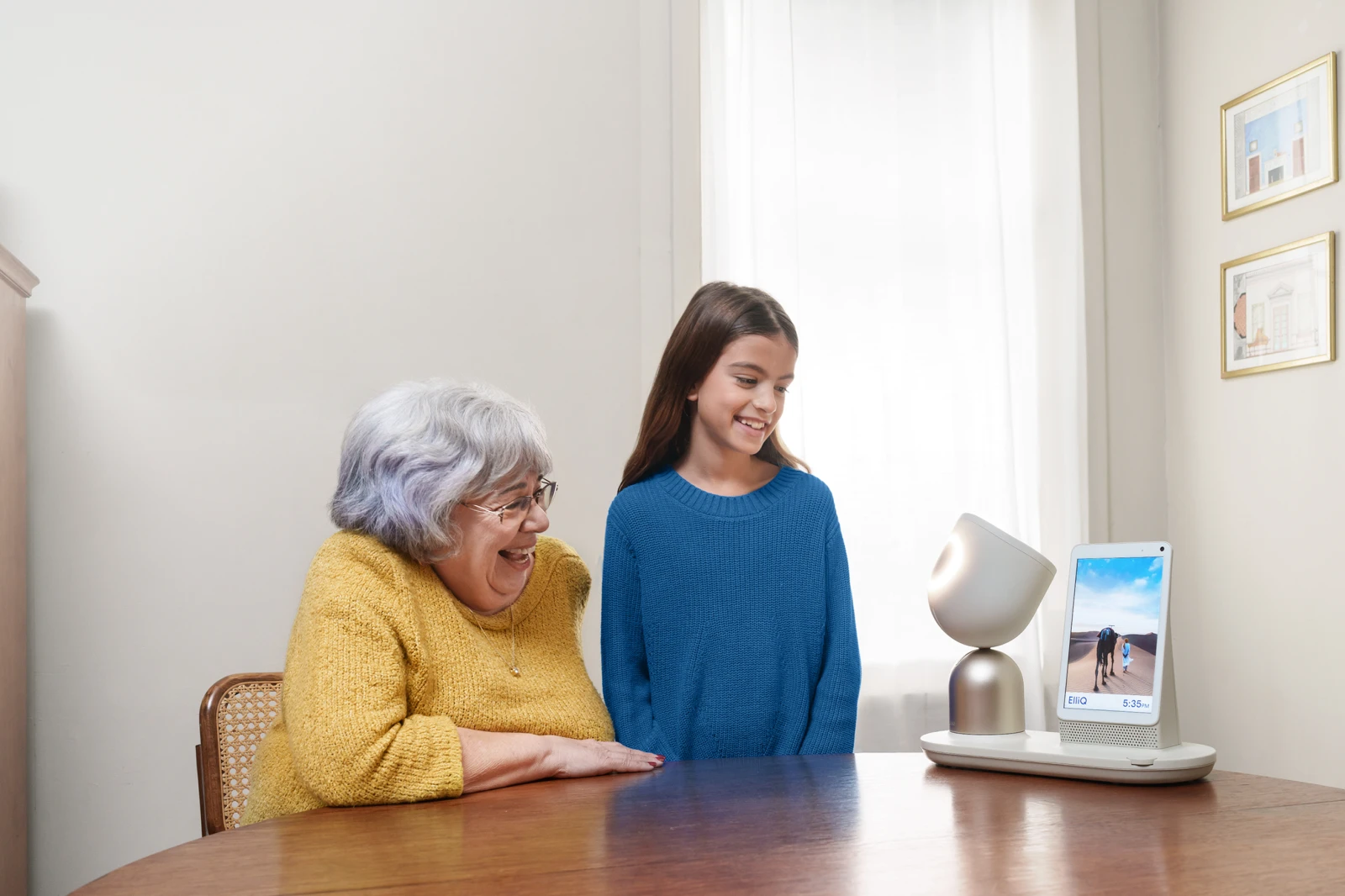
Intuition Robotics, care robot
$249 + $49 a month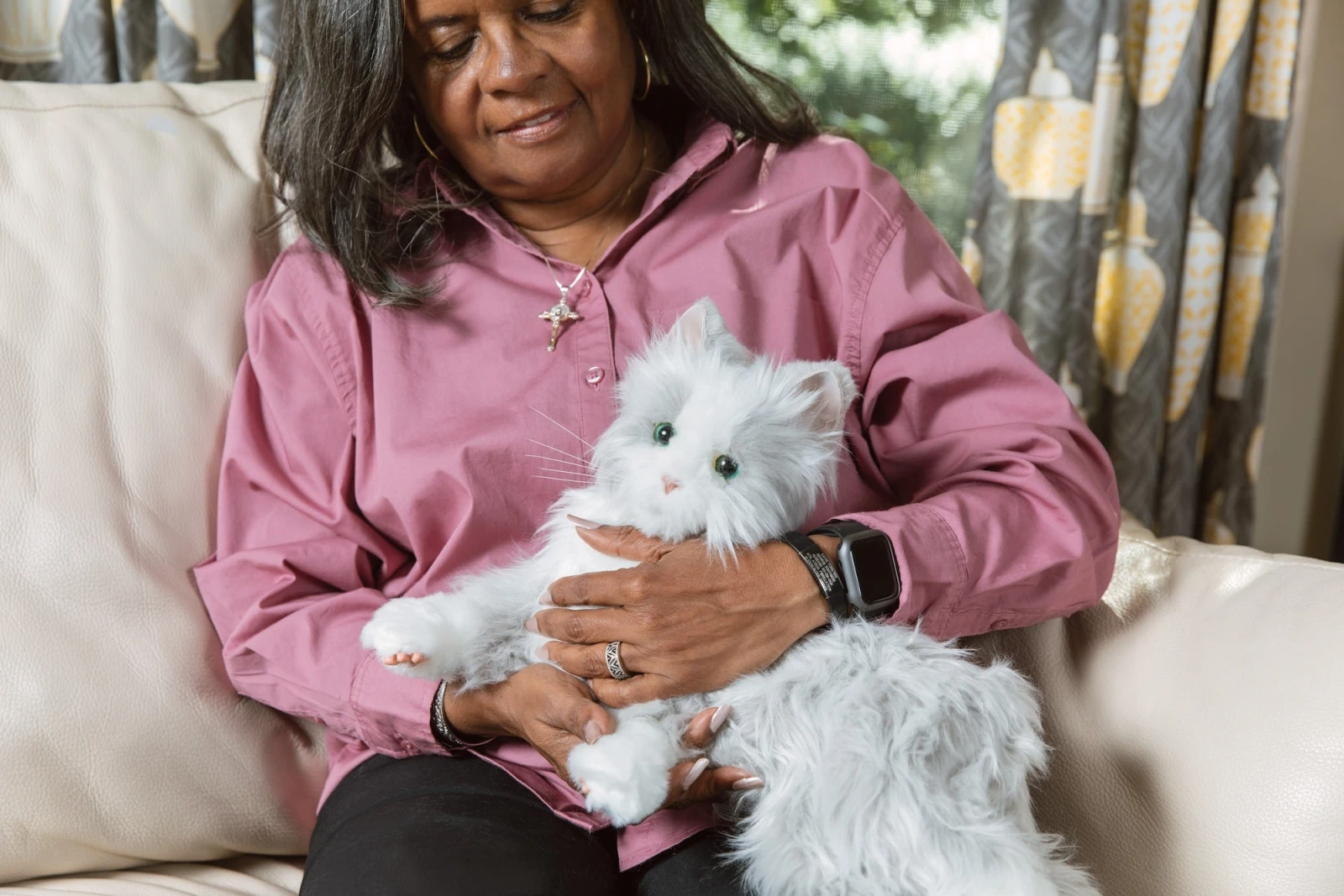
Ageless Innovation, care robot
$159.99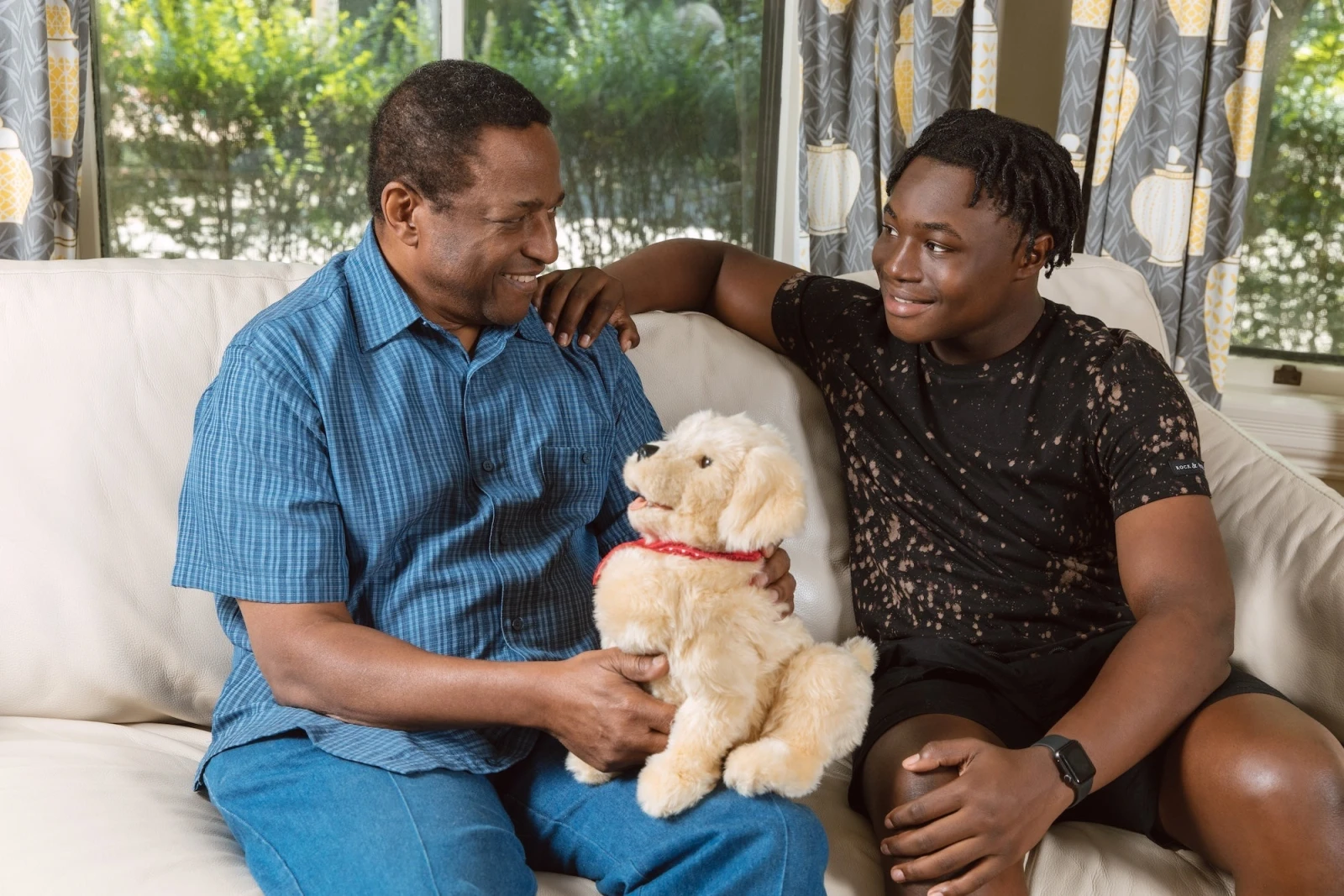
Ageless Innovation, care robot
$179.99
Sources
- Lively shop home page (Lively Mobile2 offer)
- Medical Alert Plans for Seniors
- Medical alert system pricing
- MobileHelp home page
- Medical alerts
- Life Alert Cost & Pricing 2026
- Use Fall Detection with Apple Watch
- Buy Apple Watch SE 3
- ElliQ FAQs
- Ageless Innovation collection
- Vayyar Care
- Medicare Managed Care Manual, Chapter 4: Benefits and Beneficiary Protections (Rev. 121)
- Older Adult Falls Data
- STEADI: Older Adult Fall Prevention
- Eldercare Locator
- ElliQ annual subscription (store page)
- Choose your membership
- MG Home Cellular checkout: plans and add-ons
- MG Move checkout: plans and add-ons
- Companion Pet Cats
- Companion Pets - Pup
- Ageless Innovation expands global distribution network
- Digital Personal Alarm
- Lifeline: how much does it cost?
- Telecare National Action Plan: protecting telecare users throughout the digital phone switchover
- Attendance Allowance
- Personal Alarm Watch with fall detection
- Lifeline Canada home page and FAQ