Apple says the watch “cannot detect all falls”, and it publishes no detection rate. We found no peer-reviewed study of Apple Watch fall detection in older adults either. What Apple does document is the sequence: after a hard fall, if the wearer doesn't respond, the watch calls emergency services and texts their emergency contacts.
That makes it fine for a parent who will wear and charge it every day. For a parent who won't, I would buy a monitored pendant instead, at about $35 to $50 a month in the US. This guide rests on Apple's support pages, one 2022 lab study of a smartwatch app, four US alarm companies' own pages and Apple store prices checked on 22 and 23 November 2026.
From the fall to the 911 call, second by second
Apple's support page (6 May 2026) sets out what happens. At the moment of a hard fall, the watch taps the wrist, sounds an alarm and shows an alert. If the wearer is moving, it waits for a response.
If they stay still for about a minute, it starts a 30-second countdown. When the countdown ends, it “automatically contacts emergency services” and sends the emergency contacts a message with the wearer's location. By our arithmetic, a parent who cannot respond gets help called about 90 seconds after the fall. The wearer can cancel at any point.
Two settings decide whether the family hears about it. Wrist Detection must be on. Messages must be the selected texting app, or emergency contacts are not told automatically.
Which models, and when it switches on by itself
Fall Detection works on Apple Watch SE, Series 4, Ultra and later (Apple, 6 May 2026). If your parent already wears one of these, check that it is on; it costs nothing extra.
It switches itself on only for wearers who are 55 or over and entered their age during setup or in the Health app. Anyone else aged 18 or over can turn it on in the Watch app on iPhone (My Watch > Emergency SOS), either always or only during workouts.
Away from the iPhone: cellular, Wi-Fi Calling, satellite
The watch needs a way to place the call. Apple lists a satellite or cellular connection, or Wi-Fi Calling via the watch or a nearby iPhone. Some cellular networks may not accept an emergency call from a watch, and in some regions the local emergency service may ask for manual input during the call (Apple, 6 May 2026). A GPS-only watch that is out of range of its iPhone and Wi-Fi cannot call for help at all.
A parent without an iPhone can still use one. Apple's Apple Watch For Your Kids setup, formerly Family Setup, is for a family member “who doesn't have their own iPhone” (Apple, 27 Oct 2026). The name suggests children, but Apple does not limit it to them, and its page says Fall Detection is available to users 18 and older.
The watch must be a cellular Apple Watch Series 4 or later, or a cellular SE or later. You set it up and manage it from your own iPhone (6s or later, iOS 14 or later), and both of you must be in the same Family Sharing group. The watch also needs a cellular plan with a carrier that supports the setup, which Apple says “is necessary for some features”. Some health features are not available in this mode, including ECG, irregular rhythm notifications, Blood Oxygen, Sleep, Medications and Walking Steadiness. Fall Detection is not on that list.
Carriers and prices in the UK, Canada and Australia
Fall Detection contacts the local emergency service, such as 999 in the UK or 000 in Australia. What changes by country is the price, and which carriers support a watch for someone without an iPhone. Apple's carrier list on 23 November 2026:
| Market | Apple Watch SE 3 from (Apple store) | Carriers supporting Apple Watch For Your Kids |
|---|---|---|
| US | $249 | AT&T, Verizon, T-Mobile, Boost, Cricket, Xfinity Mobile and others |
| UK | £219 | EE (O2, Vodafone and 3 support the watch, but not this setup) |
| Canada | C$329 | Bell, Rogers, SaskTel, Telus |
| Australia | A$399 | Telstra (Optus and Vodafone support the watch only) |
| India | not checked | Jio |
| Singapore | not checked | Singtel, StarHub |
| UAE | not checked | e& |
| New Zealand, Ireland | not checked | none listed |
Sources: Apple watch cellular page and Apple's UK, Canadian and Australian stores, accessed 23 Nov 2026; US store 22 Nov 2026. “From” prices are the cheapest SE 3; the cellular version costs more.
So a UK family wanting a watch for a parent with no iPhone has to use EE, an Australian family Telstra, and a Canadian family Bell, Rogers, SaskTel or Telus. In New Zealand and Ireland, Apple lists no carrier for the setup at all, so the parent would need their own iPhone or a pendant. UK readers comparing a watch with a monitored alarm should also read Personal alarms for elderly people in the UK: costs and how to choose, which covers council and private services and the digital phone-line switchover.
No detection rate, one lab study
Apple publishes no detection rate or false-alarm rate. It says high-impact activity can be mistaken for a fall.
The nearest evidence is a 2022 study in JMIR Formative Research of a third-party fall-detection app (from My Medic Watch, not Apple's feature) on three smartwatches, using induced falls in healthy adults. It reported 77% sensitivity and 99% specificity, with a false-negative rate of 16.4% (21 Mar 2022). Sensitivity is the share of real falls caught, so roughly one fall in four or five was missed in that lab set-up; specificity is how rarely it raised an alarm when there was no fall. The authors point out that their healthy participants were unlike the older adults who would most likely use the app. The study shows that wrist detection can miss falls. It does not score Apple's feature.
Medical alert pendants publish no better numbers. None of the four US companies we checked gave a detection or false-alarm rate. Lively says its fall detection “may not always accurately detect a fall” and that a Mobile2 carried in a purse or on a belt clip “will cause real falls to go undetected”. Medical Guardian says dropping the device can cause a false alarm and that “false alarms are expected”.
Radar sensors take a different approach: they sit on a wall or ceiling, so nothing has to be worn or charged. Vayyar describes its Care system as working without camera, sound or wearables, but its pages are aimed at care providers and give no accuracy or false-alarm figures (Vayyar, accessed 22 Nov 2026).
Where a monitored pendant wins
| Apple Watch (cellular) | US medical alert pendant or watch with fall detection | |
|---|---|---|
| Who answers | Emergency services directly, plus a message to contacts | A monitoring centre agent, who can call 911, family or a neighbour |
| Upfront cost | Apple Watch SE 3 from $249 (Apple US, 22 Nov 2026) | $0 to about $139 for the device on the sites we checked |
| Monthly cost | Carrier cellular plan (varies) | About $35 to $50 with fall detection, e.g. Lively Basic $24.99 + $9.99; Bay Alarm Medical $44.95 to $49.95 |
| Charging | Regular charging; check Apple's battery figure for the model | Varies by device |
| Contract | None with Apple | Lively and MobileHelp say no long-term contract |
| Published detection rate | None | None |
Prices from Lively, Bay Alarm Medical and MobileHelp US sites, 22 Nov 2026. Full US fee comparison: Life Alert cost, and cheaper medical alert systems.
A pendant puts a person on the line. For a parent who forgets to charge devices, struggles with touchscreens, takes the watch off at night or in the shower, or would rather talk to someone than have emergency services called, that is worth the monthly fee. Pendant services sell their own device with its own connection; MobileHelp's Elite, for example, has “4G LTE Verizon nationwide coverage included” (MobileHelp, 22 Nov 2026). None of the pages we read said the wearer needs a smartphone, but confirm it for the model you choose. Family apps such as Lively Link are for relatives.
The watch wins for a parent who already likes tech, will keep it charged, can read and cancel an alert on a small screen, lives with good mobile coverage, and wants something that looks like an ordinary watch. The Apple Watch SE 3 starts at $249 in the US, £219 in the UK, C$329 in Canada and A$399 in Australia, and the cellular models cost more and need a carrier plan. Some families use both. In the US, start with Life Alert cost, and cheaper medical alert systems; in the UK, Personal alarms for elderly people in the UK: costs and how to choose.
What the watch can't do for a parent living alone
A watch on its charger detects nothing, and no device prevents a fall. The CDC says “1 in 4 older adults report falling every year”, and the age-adjusted fall death rate for older Americans rose from 64.7 per 100,000 in 2018 to 78.4 in 2024 (CDC, updated 4 Sep 2026). Its STEADI programme has a “Stay Independent” fall-risk checklist to take to a doctor. If your parent has fallen, or is afraid of falling, that conversation matters more than which device you buy.
Talk the choice through with your parent first. A watch that calls emergency services and shares location is theirs to wear, and they should know what it sends and to whom.
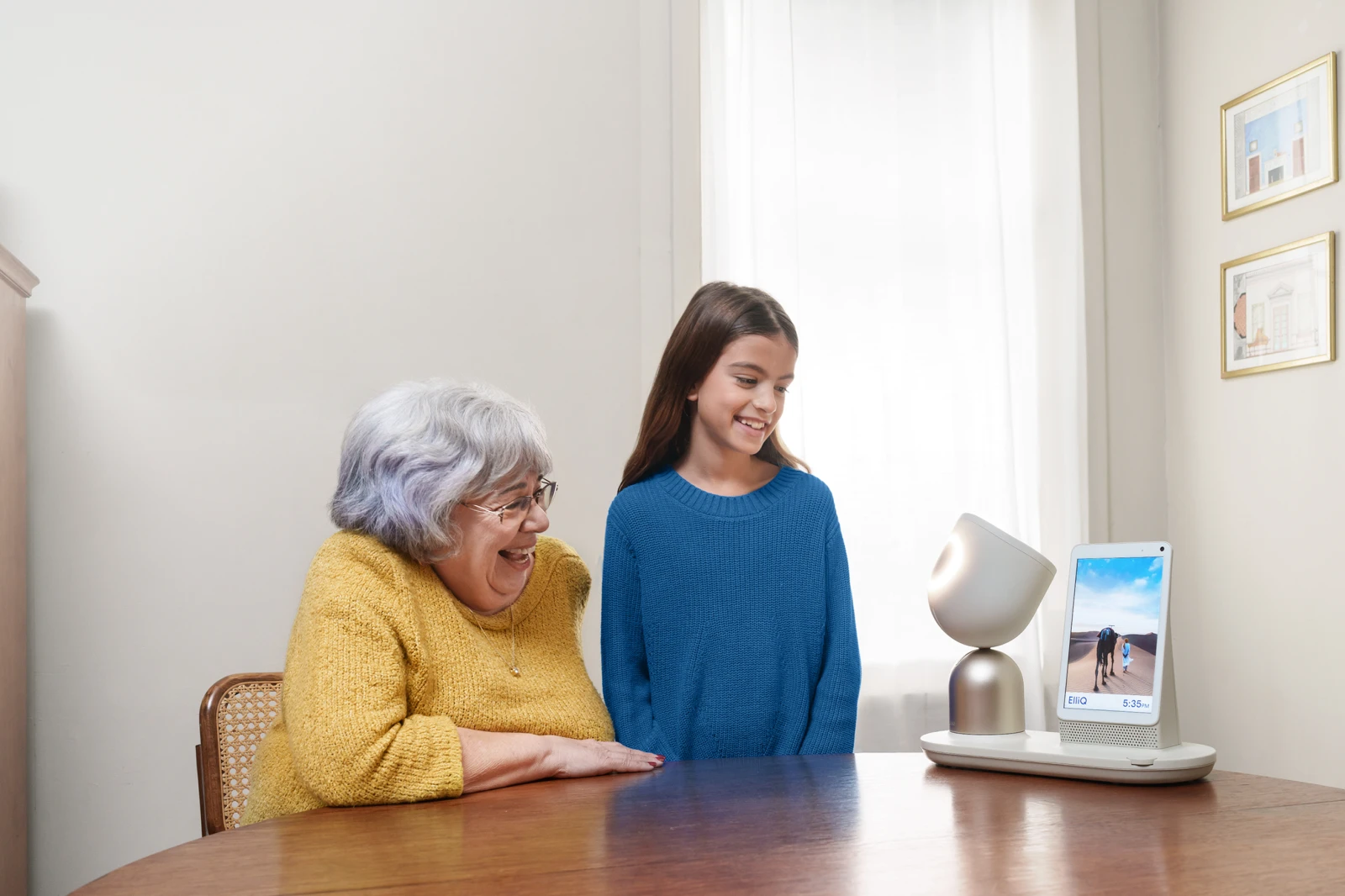
For the full home set-up (alarms, sensors, cameras and companion robots, with consent and privacy), see Senior monitoring systems: how to look after a parent who lives alone. Companion robots such as ElliQ do not detect falls; see Care robots for older people: what works today. More elder tech is in Elder tech.
Questions families ask about the watch
Does Apple Watch fall detection work without an iPhone? Yes, if the watch has its own connection. A cellular watch can be set up for a family member who has no iPhone through Apple Watch For Your Kids (formerly Family Setup), managed from a relative's iPhone, on a carrier that supports it. A GPS-only watch out of range of its iPhone and Wi-Fi cannot call for help.
Is fall detection on automatically for seniors? Apple says it turns on automatically for users aged 55 and over who entered their age during setup or in the Health app. Younger adults (18 and over) can turn it on in the Watch app on iPhone, always on or only during workouts.
How accurate is Apple Watch fall detection? Apple does not publish a detection rate on its support page; it says “Apple Watch cannot detect all falls” and that high-impact activity can trigger it. We found no peer-reviewed study of Apple's own feature in older adults.
Is an Apple Watch better than a medical alert pendant? It depends on your parent. A watch has no monitoring fee and calls emergency services directly, but it only works if it is worn and charged. A US pendant service with fall detection puts a call centre agent on the line and cost about $35 to $50 a month on the sites we checked (22 Nov 2026).
Does it work in the UK, Canada or Australia without an iPhone? Fall Detection itself works wherever the watch can make an emergency call. Setting up a cellular watch for someone without an iPhone depends on the carrier. On Apple's list (23 Nov 2026) that means EE in the UK, Bell, Rogers, SaskTel or Telus in Canada, and Telstra in Australia.
Sources
- Use Fall Detection with Apple Watch
- Set up Apple Watch for a family member
- Buy Apple Watch SE 3
- Apple Watch SE 3
- Apple Watch cellular carriers, including Apple Watch For Your Kids
- Buy Apple Watch SE 3 (UK store)
- Buy Apple Watch SE 3 (Canada store)
- Buy Apple Watch SE 3 (Australia store)
- Effectiveness of a Smartwatch App in Detecting Induced Falls: Observational Study
- Fall Detection (help center)
- Medical Alert Plans for Seniors
- Fall Detection
- Medical alert system pricing
- MobileHelp Elite
- Vayyar Care
- Older Adult Falls Data
- STEADI: Older Adult Fall Prevention
- Apple, Use Fall Detection with Apple Watch, 6 May 2026; Set up Apple Watch for a family member, 27 Oct 2026; Apple Watch cellular carriers page, accessed 23 Nov 2026; Apple Watch SE 3 store pages for the US (22 Nov 2026), UK, Canada and Australia (23 Nov 2026).
- JMIR Formative Research, smartwatch fall-detection app study, 21 Mar 2022.
- Lively, Medical Guardian, Bay Alarm Medical and MobileHelp US pages, accessed 22 Nov 2026. Vayyar Care, accessed 22 Nov 2026.
- CDC, Older Adult Falls Data, updated 4 Sep 2026; STEADI, accessed 22 Nov 2026.