Nothing on sale today lifts, washes, dresses or feeds an older person. Every elder care robot you can buy offers company, comfort or reminders, and the evidence behind them is thin. Only Paro, the robotic seal, has a large randomised trial, and its gain over a plain soft toy was in engagement alone. ElliQ's figure of 94–95% of users feeling less lonely comes from programme reports, the latest written by the maker, with no comparison group.
For a parent at home, I would start with a Joy for All cat or pup at $159.99 to $179.99 on the maker's US store (23 November 2026). It needs no app and no setup. Lease ElliQ, a talking tabletop companion, only in the US and only after reading its contract. Leave Paro to care homes. And don't plan around Tombot's Jennie puppy, promised since 2020 and still on a waitlist. Humanoid home robots on pre-order are not sold as care devices either.
This explainer rests on six published studies and programme reports, each with its size, design and funder, plus the makers' pages, prices checked on 22 and 23 November 2026 and AFP's reporting from South Korea. For fall detection, see Apple Watch fall detection for seniors: how well it works and what else to use; for general companion robots, Companion robots you can buy: EMO, Eilik, Vector, Loona and more.
Seven robots by price, status and evidence
| Robot | Maker (country) | What it is | Price (source, date) | Status | Where |
|---|---|---|---|---|---|
| Paro | Intelligent System / AIST (Japan) | Robotic baby seal that responds to touch and voice | $6,000 at US launch (PARO Robots U.S., Nov 2009); current price unconfirmed | Shipping | About 50 countries (AIST) |
| Joy for All cat, pup, bird | Ageless Innovation (US) | Battery robot pets that purr or bark and move | Cat $159.99, pup $179.99 (Joy for All, 23 Nov 2026); bird $76.99 (RobotShop, 22 Nov 2026) | Shipping | US; distributors in UK, IE, CA, AU, NZ |
| Hyodol | Hyodol Co. (South Korea) | Talking plush doll with reminders and reports to carers | 1,300,000 won; care-institution model 1,600,000 won (Hyodol store, 22 Nov 2026) | Shipping | South Korea |
| Jennie | Tombot (US) | Robotic Labrador puppy for the lap | Not published by Tombot; about $1,500 per a contributed CES article (WTOP, Jan 2026) | Pre-order | Waitlist |
| LOVOT 3.0 | GROOVE X (Japan) | Wheeled cuddle robot that roams the home | ¥599,500 plus from ¥9,900/month (GROOVE X, 22 Nov 2026) | Shipping | Japan, mainland China |
| Palro | FUJISOFT (Japan) | Small talking humanoid that leads recreation in care homes | Not published | Discontinued (care-facility model) | Japan |
| ElliQ | Intuition Robotics (US/Israel) | Talking tabletop companion | $249 fee plus $39 to $59/month by plan (ElliQ, 23 Nov 2026) | Shipping | US |
Only one range here is easy to buy outright in English-speaking markets: the Joy for All pets, sold in the US and through distributors in the UK, Ireland, Canada, Australia and New Zealand. ElliQ ships only within the US. Jennie is a free waitlist (Tombot site, 22 Nov 2026), and FUJISOFT ended new sales of Palro for care facilities in April 2026.
Paro's trial and everyone else's surveys
A randomised trial assigns people by chance to the robot or to a comparison, so a difference can be credited to the robot. Only one robot here has a large one. "No published study found" in the table below means none turned up in the sources listed. There may still be one somewhere.
| Robot | Best evidence found | Size and design | What it found | Who funded or wrote it |
|---|---|---|---|---|
| Paro | Moyle et al., J Am Med Dir Assoc, 2017 | 415 people with dementia, 28 care homes in Queensland, Australia; cluster-randomised: Paro vs plush toy vs usual care; 10 weeks | Better mood and video-observed agitation than usual care; no difference on a standard agitation scale; better than a plush toy only for engagement | Academic team; funder not checked |
| Robotic pets (NYSOFA programme; brand not named on the page, which links to Joy for All) | NYSOFA pilot, 2018 | 60 people in 12 New York counties; loneliness scale before and at 3, 6 and 12 months; no control group stated | 70% reported less loneliness | New York State Office for the Aging |
| Robotic cat or dog (brand not named) | Innovation in Aging conference abstract, 2018 | 160 hospital patients over 65, randomised to a robot pet or a daily student visit | Less delirium, loneliness and falls; no difference in cognition or depression | Not stated in the abstract |
| Hyodol | Journal of Applied Gerontology, 2022 | 180 low-income, isolated older adults; measured at 0, 3 and 6 months | Depression and quality of life improved at 3 months but not at 6; authors call effects “limited” | Not checked |
| Hyodol | J Clin Med, Dec 2025 | 278 rural older adults already using Hyodol; single group, no control | High-risk depression scores fell from 33% to 18%; authors call it “preliminary” | Korean health ministry R&D grant; project supported by Hyodol Co. |
| ElliQ | NYSOFA / Intuition Robotics reports, 2023 and 2026 | 800+ users in New York; usage data and surveys; no control | 94–95% say they feel less lonely | State programme; 2026 report written by the maker |
| Tombot Jennie | No published study found | Demonstrations at senior living communities | Anecdotes only | Company says it is pursuing FDA recognition (WTOP, Jan 2026) |
| LOVOT | No eldercare study found | n/a | n/a | n/a |
| Palro | No study checked | n/a | n/a | n/a |
In the Paro trial whole care homes, rather than individual residents, were assigned by chance. Paro beat usual care on mood and observed agitation and beat a plush toy only on engagement. Most of the rest is programme data or maker-linked research without a comparison group, and several of those reports are funded or written by the makers. Survey answers from current users are weaker evidence than a trial.
Paro itself is a handmade robotic baby harp seal developed at Japan's National Institute of Advanced Industrial Science and Technology (AIST). It responds to stroking and voices (Wikipedia). AIST says the current model is the ninth generation, that it is used in about 50 countries, and that it is registered as a medical device in the US, the UK, several European countries, Switzerland, Australia, Singapore and Hong Kong (AIST, 17 Sep 2026).
It is expensive. Paro went on sale in the US at $6,000 including a one-year service warranty (PARO Robots U.S., 4 Nov 2009). The US distributor's site, parorobots.com, returned a security certificate error on 22 and 23 November 2026, so the current US price is unconfirmed, and we found no UK or Australian price either. It is sold mainly to care homes and hospitals. At its 2009 US price, one Paro cost as much as about 37 Joy for All cats at today's $159.99, which is why I send families to the cheaper pet first.
Joy for All: batteries, no app, $159.99
Joy for All cats, pups and “Walker Squawker” birds are soft, battery-powered robot pets. They respond to touch, need no app or internet, and do not talk; the batteries come in the box (Capital Caring Health product sheet, undated). The cat comes in three colours (orange tabby, tuxedo, silver with white mitts), the pup in two (golden, freckled), and the bird clips to a walking frame. They suit people living with dementia, or anyone who misses a pet but can no longer look after one, since there is nothing to feed or walk and nothing underfoot.
Ageless Innovation's own US store listed the cats at $159.99 and the pup at $179.99 on 23 November 2026. RobotShop had them a little cheaper the day before, at $149.99 and $174.99, and the bird at $76.99. You can also buy on Amazon: Maker’s order page: Joy for All Companion Pet Cat.
New York's Office for the Aging says it has given more than 35,000 robotic pets to socially isolated older adults since 2018. Its page does not name the brand, but it sends buyers to joyforall.com with a discount code, NYS20 (NYSOFA, accessed 22 Nov 2026).
Outside the US, Ageless Innovation sells through regional distributors. Ravencourt covers the UK and Ireland and, by the maker's account, supplies “major UK retailers” and care homes. Eugeria in Canada is aimed at dementia care, and Quando Medical in Australia and New Zealand serves hospitals and community care providers (Ageless Innovation release, Nov 2025). The release names no shops and no local prices, so compare prices in your own country before you buy.
Hyodol and South Korea's council route
Hyodol is a plush doll designed like a grandchild. It reminds the user about meals and medicine, sings, asks to be patted, and chats through a generative language model plus scripted dialogue. Users agree in advance that some health-related recordings, about sleep, mood, meals and pain, can go to welfare workers (AFP, 11 Jun 2026).
AFP reported about 14,500 Hyodol dolls in use in South Korea, owned privately, rented out by governments or used in nursing homes. Most reach older people through local government programmes, often free or rented (AFP, 11 Jun 2026). The maker's store lists the home model at 1,300,000 won and the institutional model at 1,600,000 won, with monthly learning material at 9,000 won and a “service extension” at 11,000 won, billing period not stated (Hyodol store, 22 Nov 2026). Korean press reported in January 2026 that AI care robots were being listed in the long-term care welfare equipment scheme, with the scheme's price not yet set (Daum News, 29 Jan 2026). Hyodol is not sold outside South Korea.
AFP quoted a nurse, Oh Sun-hwa, who worried families might visit less if they felt a device was looking after their parent. That worry applies to every robot covered here.
ElliQ: $249, then $39 to $59 a month
ElliQ is a talking tabletop companion with a moving “head” and a separate touch screen. It has been on commercial sale since March 2022 (TechCrunch, 15 Mar 2022), and in the US it is leased rather than sold. ElliQ's FAQ says it ships and is supported only within the US; its maker is targeting a Japanese launch with Kanematsu in 2026 (The Robot Report, 9 Sep 2025).
For the older person, Intuition Robotics lists conversation that ElliQ starts itself, voice notes and memoirs to share with family, exercise and meditation sessions, medication and hydration reminders, vitals tracking, games, music and news. Family members use a caregiver app to video-call the screen, send photos, set reminders and wellness goals, see when their relative was last active, and get an alert if they report pain or a change in mood (ElliQ, accessed 22 Nov 2026). The app shows only the activity and wellness updates the user agrees to share. Nobody watches them around the clock, as a monitored alarm service would. Setup needs power and Wi-Fi, with no phone or computer.
The subscription includes the device, shipping, installation support, account setup, warranty, software upgrades and support (ElliQ annual plan page, 22 Nov 2026). The membership page adds a lifetime hardware warranty and a 30-day risk-free trial (23 Nov 2026). ElliQ's own pages disagreed on price by a few cents a month:
| Plan | Membership page, 23 Nov 2026 | Store page, 22 Nov 2026 | Commitment |
|---|---|---|---|
| 24-month | $39/month, $936 billed up front | Not shown | 24 months |
| Annual | $49/month, $588 billed every 12 months | $49.99/month | 12 months |
| Monthly | $59/month | $59.99/month | Cancel any time; plan-specific fees may apply |
| One-time fee | $249 (lease initiation) | $249.99 (enrollment) | Once |
Sources: ElliQ membership page, 23 Nov 2026; ElliQ annual subscription page and FAQ, 22 Nov 2026. The FAQ gives the fee as “$249”.
Older figures are still in circulation. Fortune reported in August 2026 that the subscription “starts at $40 per month” plus a $250 initiation fee (Fortune, 3 Aug 2026), close to today's 24-month rate, and the annual plan was reported lower still at launch in March 2022 (TechCrunch, 15 Mar 2022). The store also showed a “first month on us” offer with the code WELCOME and a banner for a “free 12 month premium subscription”, without saying how the two combine with the plan price.
Three years of ElliQ, and the $1,500 non-return fee
| Plan | Year 1 | Years 1–3 |
|---|---|---|
| 24-month, renewed for another 24 months | $1,185 (covers two years) | $2,121 paid by the start of year 3 (covers four years) |
| Annual, renewed each year at $49 | $837 | $2,013 |
| Monthly throughout at $59 | $957 | $2,373 |
Our arithmetic: the one-time $249 plus the amounts billed, at the membership page prices of 23 November 2026, with no promotions and no tax. At the store's 22 November prices, the annual plan comes to $2,049.63 over three years and the monthly plan to $2,409.63.
So ElliQ costs about $2,000 to $2,400 over three years. The renewal terms differ between ElliQ's own pages: the store's annual page said the plan “will automatically continue month-to-month” after 12 months, while the membership page says plans renew for the same term. Ask which applies before you pay.
Two charges can come on top. If ElliQ is not returned within 45 days after cancellation, “a device non return fee of $1,500 applies” (ElliQ FAQ), and the FAQ asks you to keep the original box. ElliQ also needs power and Wi-Fi, so add home internet if your parent has none. Intuition Robotics' chief strategy officer told Fortune the most common setup problem is remembering the Wi-Fi password (Fortune, 3 Aug 2026).
The FAQ says the 30-day risk-free trial applies to the annual and 24-month plans only: return the device in that window for a full refund of the fee and the membership charged. The annual store page instead advertises a “30-day money-back guarantee”, so get the terms for your plan in writing. You are charged only after the device ships, and membership starts on activation, or automatically 7 days after delivery if it is not activated (ElliQ FAQ). Some ElliQ pages still showed an old “Expected shipping: End of 2019” banner on 22 November 2026. It is a leftover from the pre-order era and means nothing for delivery today.
If you go ahead, apply to a free programme first (see below), and start on the annual or 24-month plan so the 30-day refund applies. The referral link is here: Maker’s order page: ElliQ. Our earnings policy is on the how-we-make-money page.
New York's ElliQ figures, written by the maker
No large independent trial of ElliQ turned up. In August 2023 NYSOFA reported a “95% reduction in loneliness” among users, more than 30 interactions a day, 6 days a week, with more than 75% of interactions related to social, physical or mental well-being, from more than 800 New Yorkers in the first year (NYSOFA, 1 Aug 2023). The release does not say how loneliness was measured or whether there was a comparison group.
NYSOFA links a newer report covering June 2024 to May 2025. It is branded “© By Intuition Robotics”, so it is the maker's analysis of its own programme, using anonymised usage data and client survey answers:
| Measure | Figure |
|---|---|
| Homes with ElliQ (as of May 2025) | 834 |
| Applications that year | More than 3,500 |
| Average client | 75 years old; 80% female |
| Average interactions per day | 48 (29 the year before) |
| Say they feel less lonely | 94% |
| Report feeling better overall | 97% |
| Say ElliQ makes a positive difference in daily life | 88% |
| Feel more connected to the world | 79% |
| Customer satisfaction score | 4.6 out of 5 |
| Still using the wellness-goal feature after 3 months | 60% |
Source: NYSOFA / Intuition Robotics report, accessed 22 Nov 2026; the same figures were reported by Robotics & Automation News on 10 Oct 2026.
These are satisfaction figures from current users, picked by local agencies as likely to benefit, so they cannot show that ElliQ reduces loneliness. They do show heavy daily use. The report also prints three short participant comments, all positive.
Fortune interviewed Anthony Niemiec, 88, of Beacon, New York, who has had ElliQ for about four years since his wife died. He told Fortune it greets him in the morning and plays games with him, that “you feel like a dummy at first talking to this thing”, and that he sometimes has to tell it to leave him alone (Fortune, 3 Aug 2026). ElliQ is designed to start conversations, so ask whether your parent would welcome that several times a day. Intuition Robotics' Assaf Gad told Fortune the company does not believe the device can replace human companionship.
Jennie, LOVOT and Palro: waitlists and switched-off servers
Jennie is a robotic Labrador puppy built with Jim Henson's Creature Shop, designed to stay on the lap. On 22 November 2026 Tombot's site said “We have sold out our first litter” and offered only a waitlist, with pricing to be sent “closer to shipping” (Tombot). Tombot raised $7 million in June 2026 and said it had more than 23,000 pre-orders and waitlist sign-ups, with a first customer launch planned for fall 2026 (The Next Web, 25 Jun 2026). A contributed article from CES 2026, written by a PR consultancy, gave a $1,500 price (WTOP, 7 Jan 2026); Tombot has not published that figure itself. The tracker records earlier ship dates of 2020, 2022, 2025 and 2026 (Jennie). I would not plan anyone's care around its next one.
LOVOT, from GROOVE X, is a warm, wheeled robot that roams the home, recognises people and asks to be held. GROOVE X does not market it to older people; its FAQ mentions care facilities only as a home for bought-back units (GROOVE X FAQ). It is also the most expensive robot here to keep. LOVOT 3.0 costs ¥599,500 including tax from 26 October 2026 until mid-January 2027, when GROOVE X plans to raise it to ¥649,000 (GROOVE X, notice of 1 Sep 2026, updated 25 Oct 2026). A monthly plan is required, at ¥9,900, ¥12,980 or ¥19,800 (GROOVE X pricing). After cancellation “the LOVOT stops moving” and its memories are deleted, unless you pay for a pause plan (GROOVE X FAQ). Families in Japan can try one first: GROOVE X rents an inspected used LOVOT 3.0 for 22 days at ¥49,500 including tax (GROOVE X rental page, 23 Nov 2026). LOVOT is sold in Japan and mainland China only.
Palro is a small talking humanoid from FUJISOFT used for recreation in Japanese care homes. In April 2026 FUJISOFT told customers it would end new sales of the “PALRO for elderly care facilities” model and end cloud service and repairs for it and for the home “Gift Package” (FUJISOFT notices, April 2026). After that, Palro runs offline with songs, quizzes and exercises, without cloud chat or its apps. The notices give no end date; a 22 October 2026 site notice mentions suspending some functions, but we could not confirm when (Palro site).
A connected robot lasts only as long as the maker's service. Before buying any of them, ask the maker in writing what happens when its servers go.
Free places and the Area Agency on Aging
In the US, no health plan in the sources we checked covers these robots as a standard benefit. The public routes are state and local aging programmes: New York for robot pets and ElliQ, and ElliQ's partner programmes in other states. Start with your local Area Agency on Aging. The federal Eldercare Locator (call or text 1-800-677-1116, or eldercare.acl.gov) will point you to it, and you can ask about social-isolation programmes and companion technology. If a plan says it covers a robot, get the answer in writing.
New York's ElliQ programme is limited. NYSOFA says “a limited number of ElliQ units is available, only in participating counties/offices and subject to the availability of funding,” with local offices for the aging choosing who gets one, and its page refers to approximately 900 units (NYSOFA, accessed 22 Nov 2026). The state extended the programme in October 2026 (Robotics & Automation News, 10 Oct 2026).
Elsewhere, Intuition Robotics' Partners Program says ElliQ is “fully funded by our partners for eligible participants” (ElliQ Partners Program, accessed 22 Nov 2026). You fill in an online eligibility form and the request goes to the partner in your state, which checks eligibility. If approved, ElliQ is shipped with setup help, no billing details are needed, and pickup is free when you leave. If the programme is full you join a waiting list, and if no programme covers your area you are offered a discount code to buy instead. The page says the programme runs in five states and names partners including Area Agencies on Aging (Olympic AAA; Broward County), Washington State DSHS, Hudson County Division on Aging Services, and the health plans MetroPlus Health and Inclusa. It does not list eligibility rules. Fortune also reported that Intuition Robotics works with programmes that can provide ElliQ at no cost (Fortune, 3 Aug 2026).
In the UK, Ireland, Canada, Australia and New Zealand, we found no public funding scheme for these robots for people living at home. Joy for All is the one range with named distributors in all five markets, and they sell mainly to care homes, hospitals and community care providers, so a care home or care agency may already have pets to lend. Paro is registered as a medical device in the UK and Australia, but we found no price or funding route.
ElliQ has no sensible import route, because the device is leased, billed monthly and backed by US support only. Kanematsu announced a demonstration event in Japan for October 2026 while still evaluating a rollout (Hokkaido Shimbun press release, 10 Sep 2026). No UK, Canadian or Australian plan has been announced. Families there can cover the safety side with a monitored alarm (UK prices and council services are in Personal alarms for elderly people in the UK: costs and how to choose) and the comfort side with a Joy for All pet.
In Japan, care providers can get 300,000 yen per Paro under the health ministry's care technology support project, with a guideline of one unit per 10 places (AIST, 17 Sep 2026). AIST also says France has funded Paro for dementia care since 2018. That is the developer's statement, and we have not confirmed it with French authorities.
Consent before cameras and microphones
Ask your parent before a robot arrives, and let them say no. A doll or toy-like pet can feel childish to someone without dementia. Paro's trial was in people with dementia, and its results do not carry over to everyone.
The simple pets collect nothing. Joy for All cats run on batteries with no app or connection listed, and Paro has microphones and touch sensors but no camera or cloud (tracker records).
The connected robots are different. ElliQ has cameras and microphones and needs Wi-Fi. Intuition Robotics says the cameras do not record users and caregiver updates are sent only if enabled (ElliQ FAQ, 23 Nov 2026). The FAQ adds that the camera works like a motion sensor and “is only fully activated when used for features you choose, like video calling and taking selfies”. When idle, by the FAQ's account, ElliQ listens only for its wake word and does not record in the background; anonymised metadata is used to personalise and improve the service, and personal data is not monetised. ElliQ describes itself as “Designed for HIPAA Compliance” (ElliQ FAQ, 22 Nov 2026), a reference to the US health-privacy law. Fortune added that users can ask ElliQ to forget details or request deletion, and that the company says it encrypts data and separates identifying details (Fortune, 3 Aug 2026). The 2026 New York report says users choose who sees their information and can opt out at any time.
Before setup, decide together who gets caregiver-app access, which alerts your parent agrees to, and whether your parent understands that the device remembers what they tell it. With Hyodol, your parent should know which welfare workers receive those recordings.
None of these robots claims to detect falls or call for help, so none replaces an alarm. “ElliQ is not an emergency device,” says its FAQ, which tells users to call 911 in an emergency, and it stays on a table, out of reach of someone who falls in the bathroom. If falls are the worry, buy a fall-detection device first.
Apple Watch Fall Detection works on Apple Watch SE, Series 4, Ultra and later, and switches on automatically for wearers 55 or older. After a hard fall the watch taps the wrist and sounds an alarm. If the person does not move for about a minute, it counts down 30 seconds, then calls emergency services and messages emergency contacts with the location. It needs cellular, satellite or Wi-Fi Calling to connect, and Apple notes it “can't detect all falls” (Apple, accessed 22 Nov 2026). Monitored alarms with a call centre are the other route: compare the monthly fee, any equipment charge, whether fall detection costs extra and the cancellation terms. See Apple Watch fall detection for seniors: how well it works and what else to use, US alarm prices in Life Alert cost, and cheaper medical alert systems and UK council and private alarms in Personal alarms for elderly people in the UK: costs and how to choose.
No robot replaces visits either. For medical questions, including whether a robot suits someone with dementia, talk to their doctor or care team. Every robot named here has a page in Robots for an older parent.
Robots in this guide

Intelligent System Co., care robot
$6,000 (2009 price)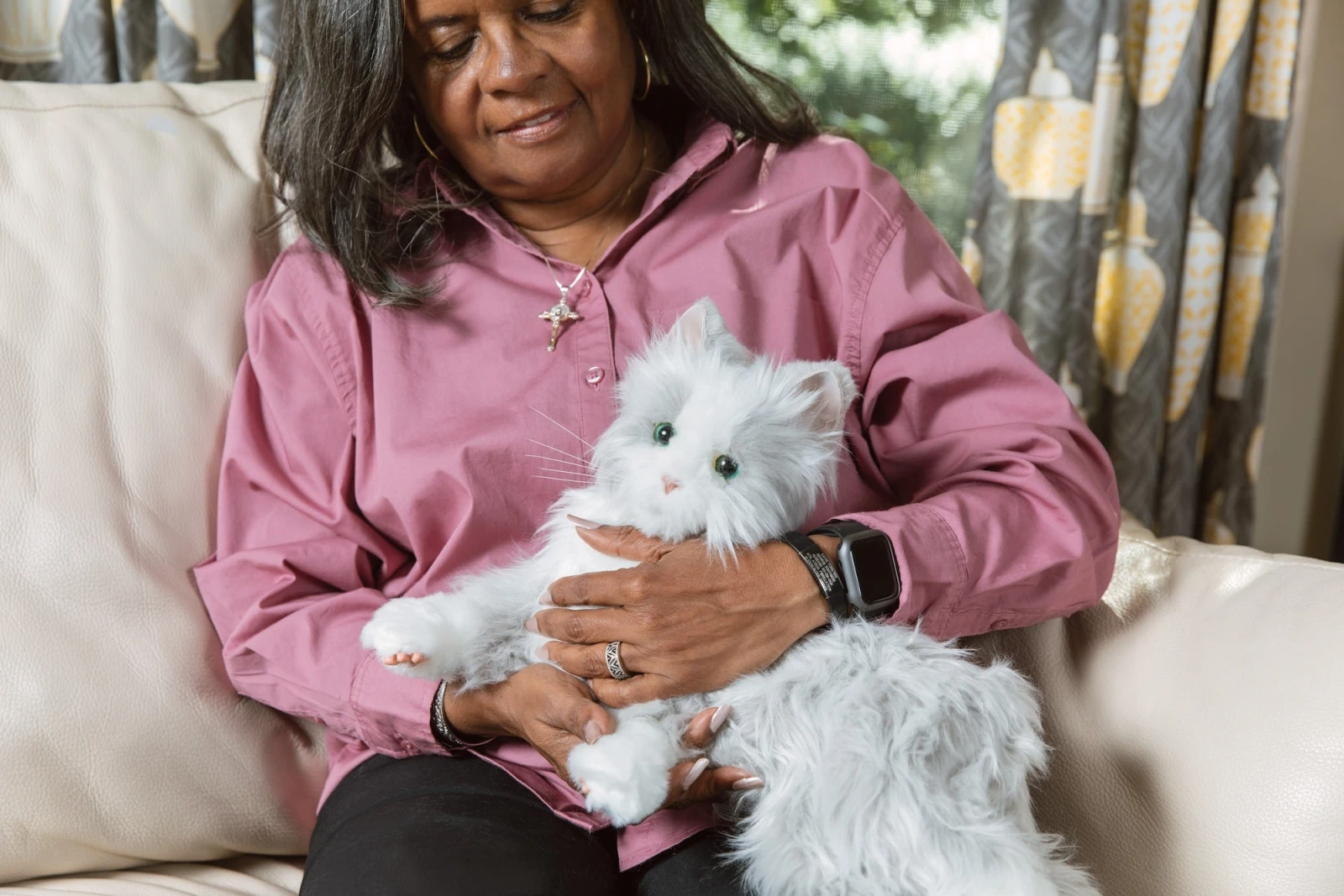
Ageless Innovation, care robot
$159.99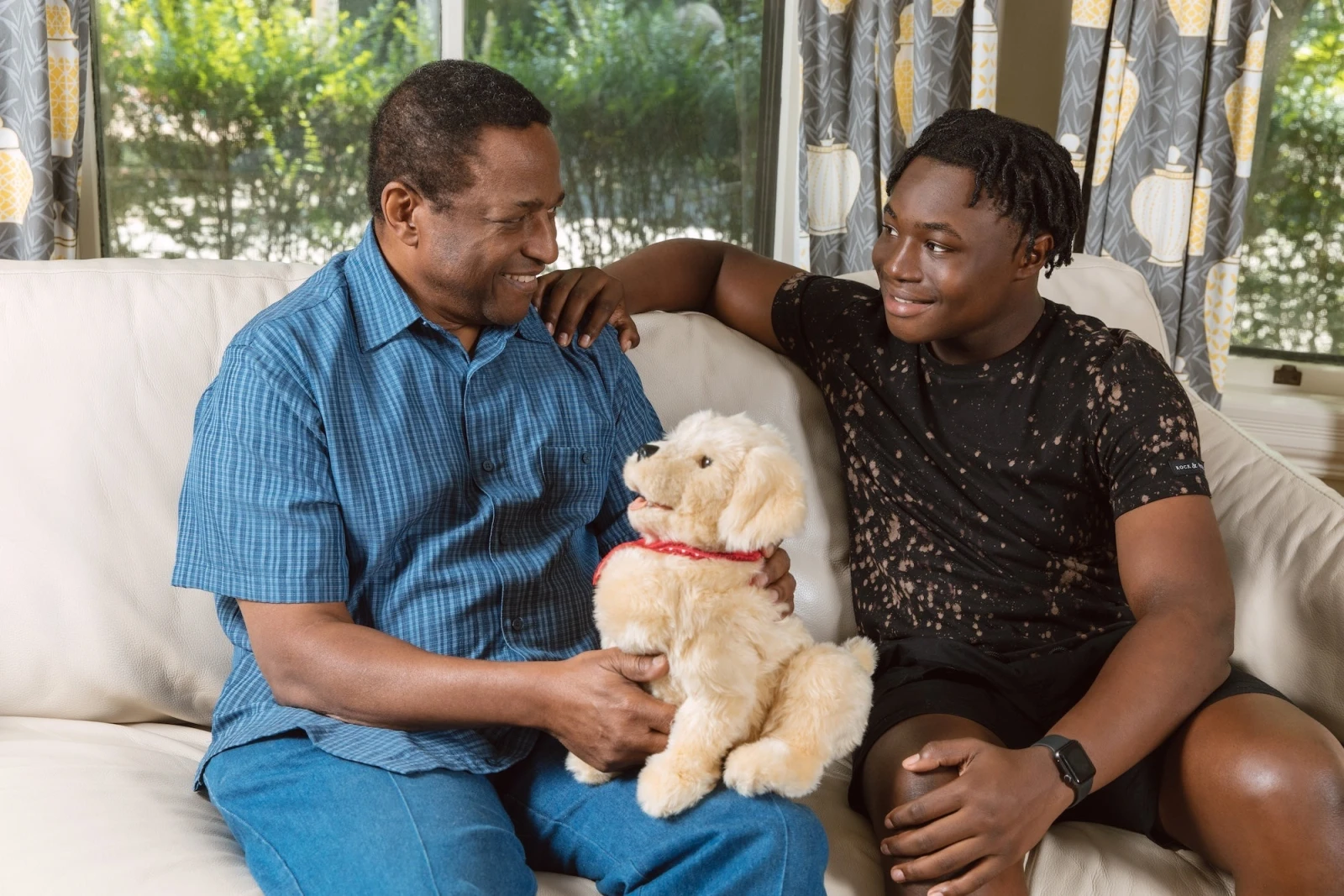
Ageless Innovation, care robot
$179.99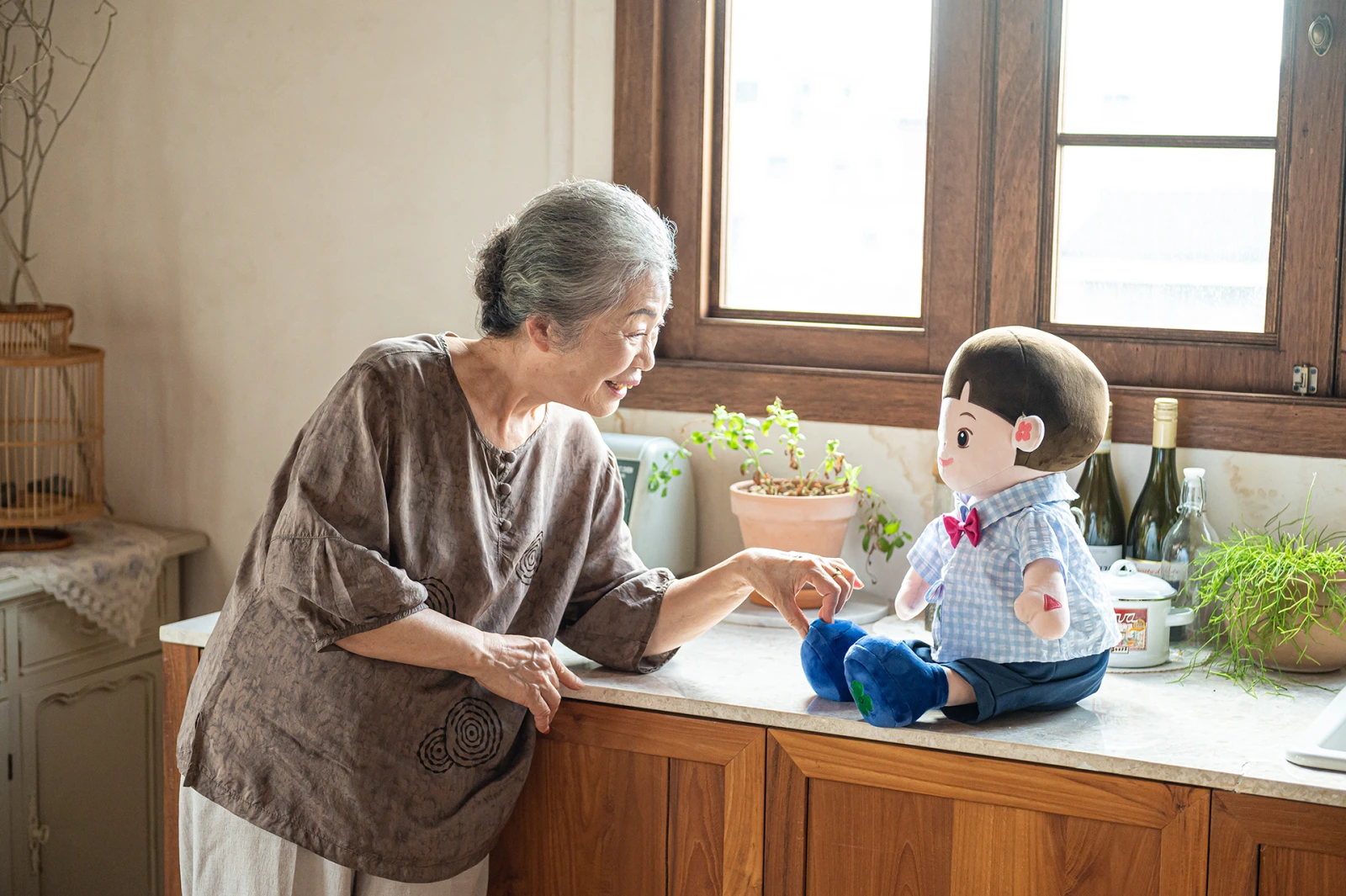
Hyodol Co., Ltd., care robot
₩1,300,000 abroad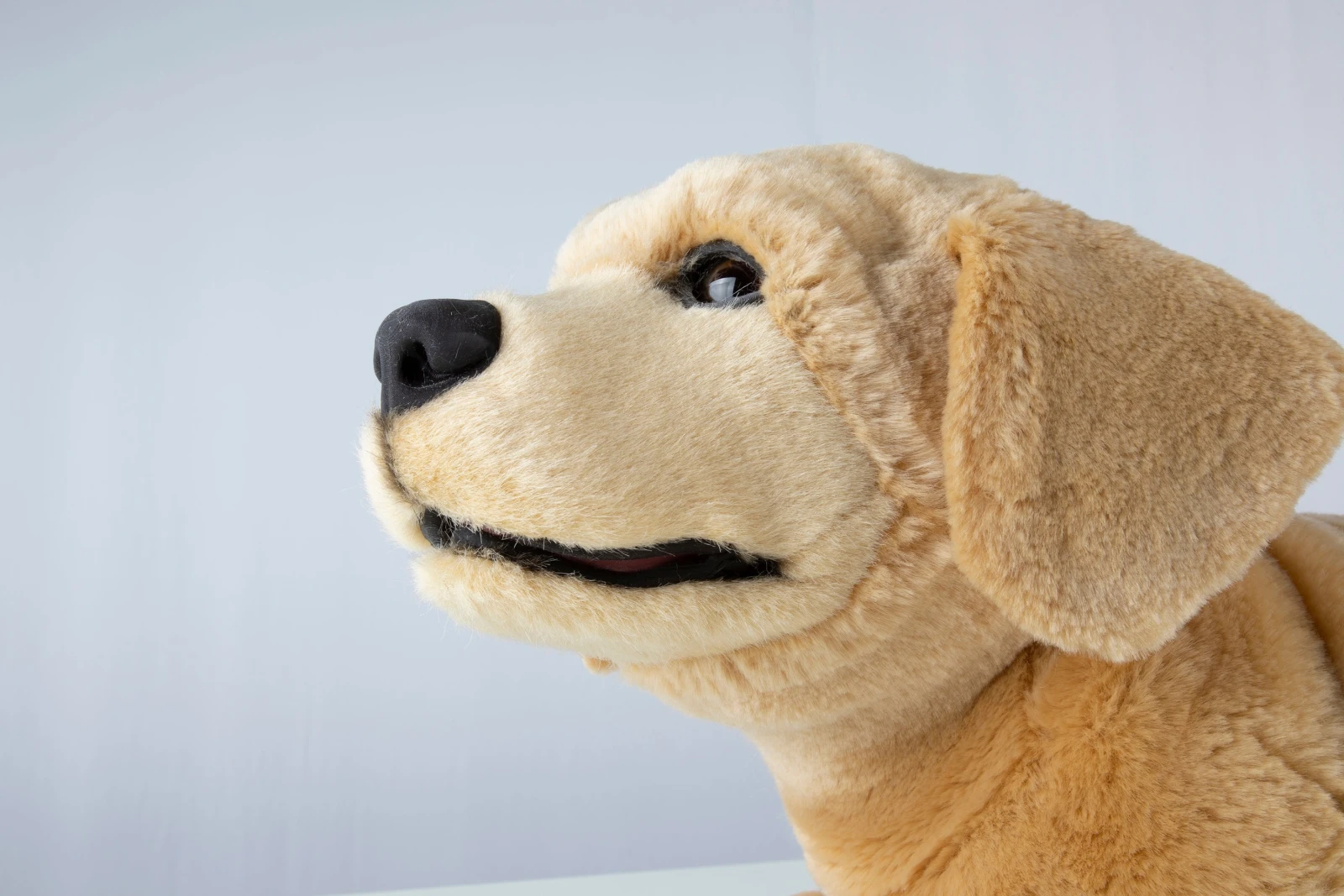
Tombot, care robot · Pre-order
$1,500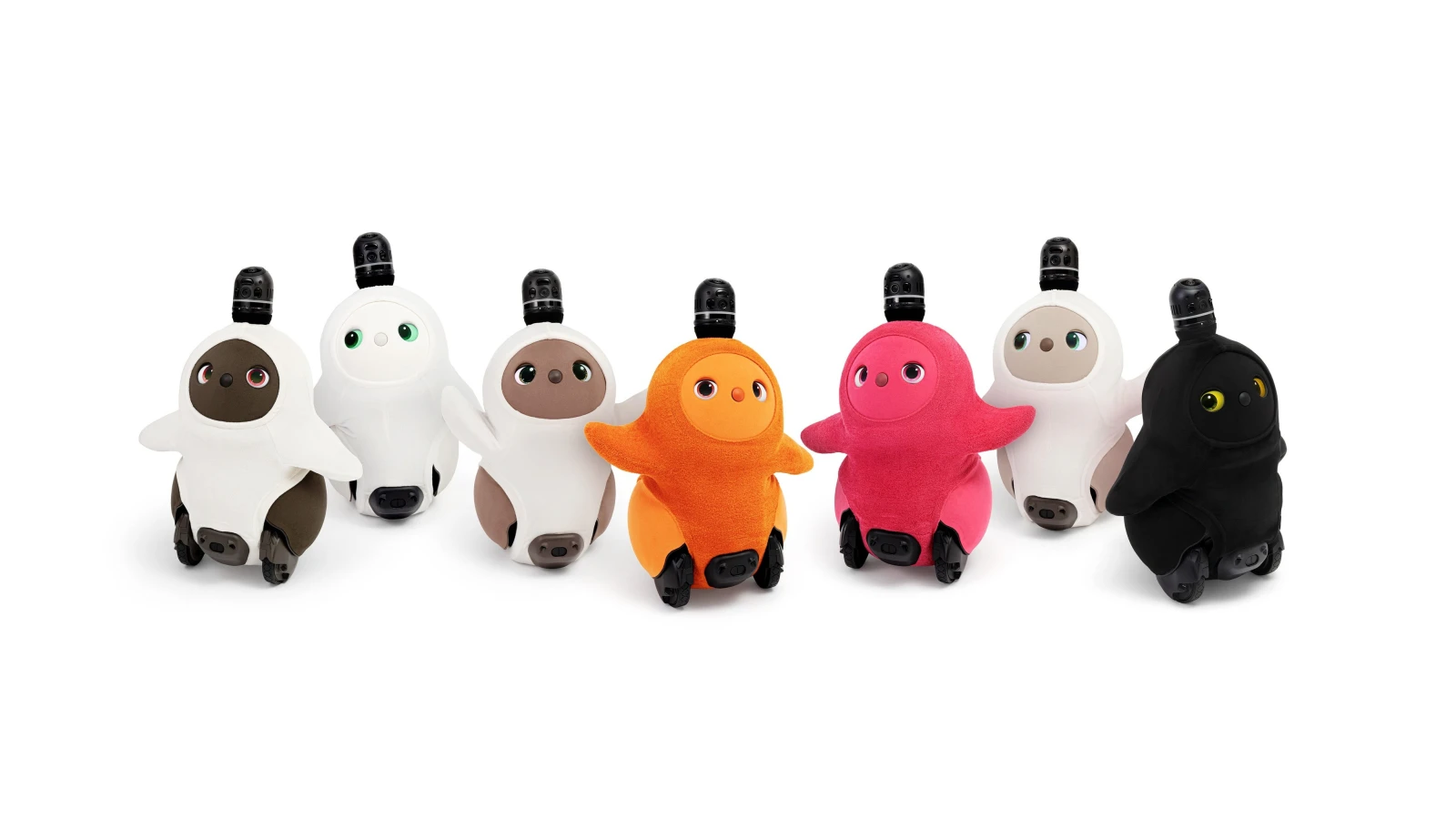
GROOVE X, companion robot
¥599,500 + ¥9,900 a month abroad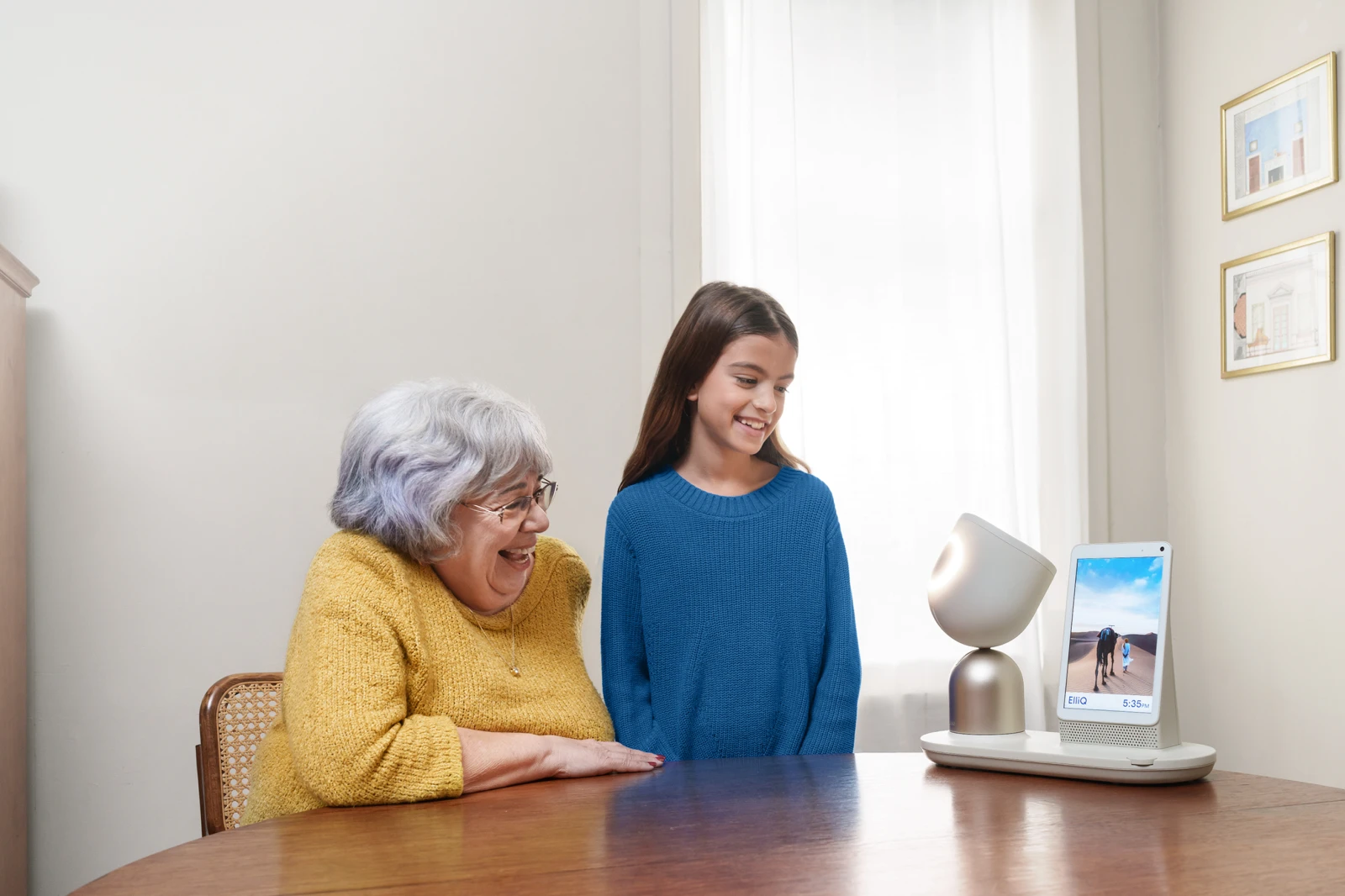
Intuition Robotics, care robot
$249 + $49 a month
Sources
- AIST: PARO at the Louvre-Lens exhibition; history and subsidy (press release)
- PARO Robots announces launch of sales and delivery in the U.S.
- Moyle et al., Use of a robotic seal as a therapeutic tool to improve dementia symptoms: a cluster-randomized controlled trial (J Am Med Dir Assoc 18(9):766-773)
- Paro (robot)
- Ageless Innovation (Joy for All) collection
- Joy for All companion pets
- Joy for All companion cats (official product page)
- Joy for All companion pup (official product page)
- Ageless Innovation expands global distribution network to bring Joy for All to more older adults (press release)
- Animatronic Pets for Companionship
- Robotic pet therapy improves outcomes for hospitalized older adults (Innovation in Aging 2(Suppl 1):731, conference abstract)
- Hyodol official store
- Hyodol official site
- In ageing South Korea, AI dolls care for the elderly (AFP)
- Socially assistive humanoid robots: effects on depression and health-related quality of life among low-income, socially isolated older adults in South Korea (Journal of Applied Gerontology, abstract)
- Socially assistive robot Hyodol for depressive symptoms of community-dwelling older adults in medically underserved areas: a preliminary study (J Clin Med 15(1):217)
- Tombot - Jennie
- Tombot's Jennie puppy steals hearts at CES 2026 (contributed article)
- Tombot raises $7M Series A3
- LOVOT pricing
- LOVOT 3.0 price revision notice
- LOVOT FAQ
- LOVOT rental
- PALRO official site
- PALRO care-facility model: operation after end of service (notice)
- PALRO Gift Package: operation after end of service (notice)
- ElliQ Proactive Care Companion Initiative
- ElliQ annual subscription (store page)
- ElliQ membership plans
- ElliQ FAQ
- Intuition Robotics partners with Kanematsu to bring ElliQ to Japan
- AI care robots in the long-term care welfare equipment scheme (news report)
- ElliQ Partners Program (funded programmes)
- ElliQ features and offers page
- NYSOFA's rollout of AI companion robot ElliQ shows 95% reduction in loneliness
- Transforming care for older adults across the State of New York: three years of success with ElliQ and NYSOFA
- New York extends AI companion program in partnership with Intuition Robotics
- ElliQ companion robot for older adults
- The ElliQ eldercare robot is finally available
- ElliQ experience event at Roboterrace Tsujido (press release)
- Joy for All companion cat product sheet
- Use Fall Detection with Apple Watch
- Eldercare Locator